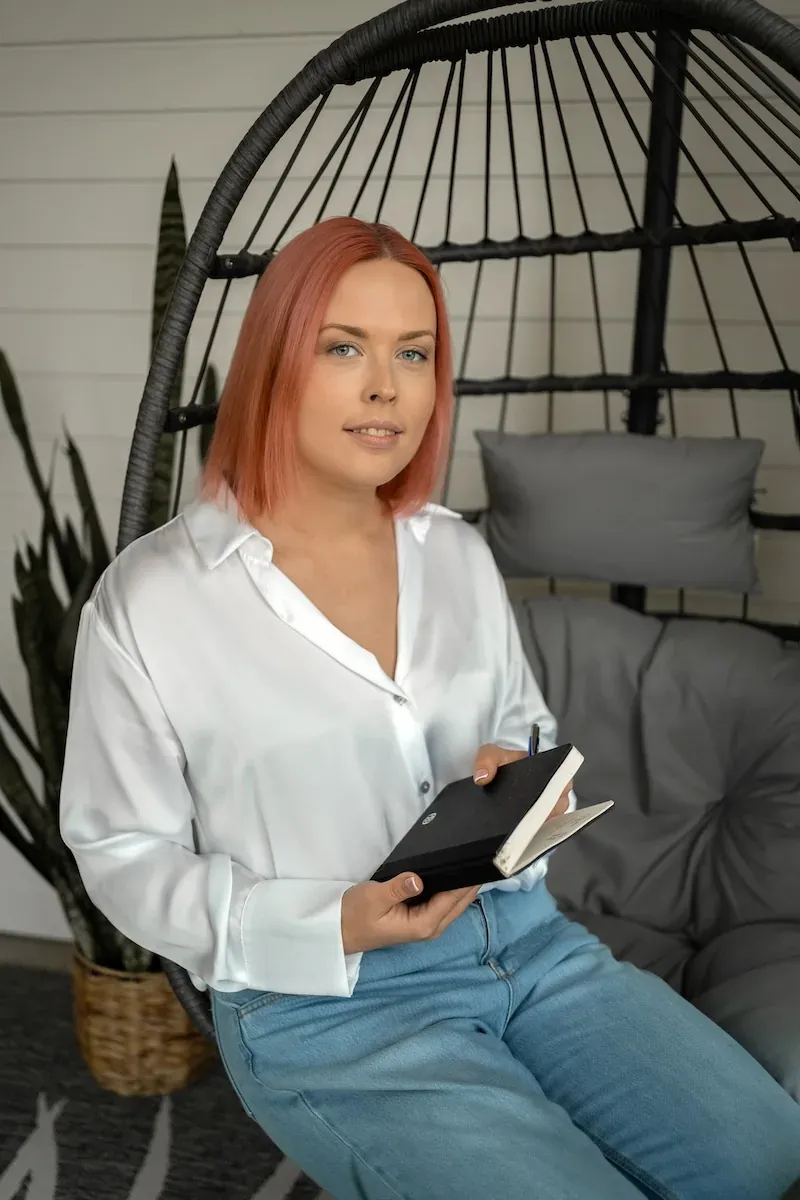

For many people, an online psychology session feels unfamiliar or even strange: how can you discuss sensitive things through a screen? In practice, online sessions can be both convenient and helpful. In this article, I explain the first session step by step and answer the questions people often ask.
5 steps from booking to the end of your session
- 01
Choose a time for your session
Choose a suitable time in the booking calendar and enter your contact details. You will receive a booking confirmation by email. If you have questions before booking, you can use the contact form or send an email.
Tip: feel free to write even if you are unsure whether your situation is ‘serious enough’. We can always talk it through. - 02
Get the technology ready before your session
Before your first session, you will receive information about joining through Teams. I recommend checking your camera and microphone beforehand, choosing a quiet, private room where you will not be interrupted for 50 minutes, and having water or tea nearby. Teams can be used in a browser, so you do not necessarily need to download an application.
Tip: headphones can improve sound quality and provide extra privacy. - 03
Meeting and getting to know each other
At the beginning of the session, we spend a few minutes checking the equipment and connection. We then introduce ourselves and agree the boundaries of our work together. You can tell me as much about yourself as feels comfortable. I help guide the conversation so that you feel safe and heard.
Remember: there is no ‘wrong’ answer. Your first session is a conversation, not an exam. - 04
Talking about your situation
We will spend most of the session discussing your situation: what matters most to you, the difficulties you face and what you would like to achieve. Together, we will set goals. I will ask questions to help me understand your circumstances more clearly. Our sessions are confidential within the professional and legal limits we discuss.
You are welcome to talk about your feelings. Emotions are a natural part of the conversation. - 05
A plan for working together
At the end of the session, we will discuss how we might work together: the approaches we could use, how often to meet and what outcomes may be realistic. You will also have time to ask questions. If the first session feels like a good fit, we can arrange further meetings.
Change usually takes more than one session, but taking the first step matters.
What you will need: a technical checklist
- A computer, tablet or smartphone with a camera
- A stable internet connection (at least 5 Mbps)
- Headphones or a headset (recommended)
- A quiet, private place where you will not be interrupted for 60 minutes
- Access to Microsoft Teams using the joining instructions provided
You do not need specialist software or technical skills. I will send you clear instructions before the first session.
Online or in person: how do sessions differ?
| Online session | In-person session |
|---|---|
| Join from home or another suitable place | Travel to the consulting room |
| Save time spent travelling | Allow for travel time and costs |
| May be accessible from another city or country, subject to service availability | Requires access to a local practice |
| Some people find it easier to relax | Meeting face to face in the same room |
| Can offer comparable outcomes for suitable needs and approaches | Outcomes depend on needs and approach |
Easing worries about your first session
Many people feel anxious before their first session. This is entirely understandable. Here are some common worries and what may help ease them:
- ‘I will not know what to say.’ The psychologist will help guide the conversation. You do not need a prepared speech or a precise idea of what you want.
- ‘My problem is too small / too big.’ There are no problems ‘too small’ to discuss with a psychologist. If something matters to you, it deserves attention.
- ‘The psychologist will judge me.’ A psychologist’s role is to understand and help, rather than judge or criticise. The aim is to offer a safe, non-judgemental space.
- ‘I will have to reveal everything at once.’ No. You can open up gradually, at a pace that feels comfortable. You do not have to share everything.
Frequently asked questions before your first session
Is an online psychology session as effective as meeting in person?
Video-based therapy can offer outcomes comparable to in-person therapy for some difficulties and approaches, although this varies with the person and their needs. Research on online therapy is extensive, but it does not establish that every format works equally well for everyone. Some people also find it easier to relax when joining from the familiar surroundings of home.
What should I do if the connection drops during a session?
This happens occasionally; if it does, simply reconnect. If the connection has not returned after 2-3 minutes, you can send a message or call. Technical problems are not your fault, and your session will not be shortened because of them.
How long will the first session last?
The first session lasts 50 minutes. We use this time to get to know each other, understand your situation and discuss a plan for working together. As the first meeting focuses on understanding your circumstances and needs, the psychologist may ask more questions than in later sessions.
Do I need special equipment for an online session?
A computer, tablet or smartphone with an internet connection and a camera is enough. Headphones or a headset are recommended for clearer sound. Sessions use Microsoft Teams, and you will receive joining instructions before your appointment.
Will I have to tell you everything about my past in the first session?
No. The first session is a chance to get to know each other, rather than an exhaustive account of your life. You can share as much as feels comfortable. The psychologist will help guide the conversation, and more of your story can emerge naturally over several sessions.
How can I prepare for my first online session?
Choose a quiet place where you will not be interrupted for 60 minutes. Check your internet connection and camera in advance, and have some water nearby. You can write down the main questions or thoughts you would like to discuss, but you do not have to.
Is an online session confidential?
Confidentiality is a core principle of a psychologist’s professional ethics, and your conversation is treated as private. Its limits, including situations involving serious safety concerns or legal requirements, should be explained before you begin. Join from a private space where other people cannot overhear, and follow the joining instructions to help protect the privacy of the call.
The first step can feel the hardest, and it can also be an important one.
Choose a suitable time in the booking calendar and let us begin together. An online session makes psychological support more accessible from a place that works for you. You are welcome to get in touch.