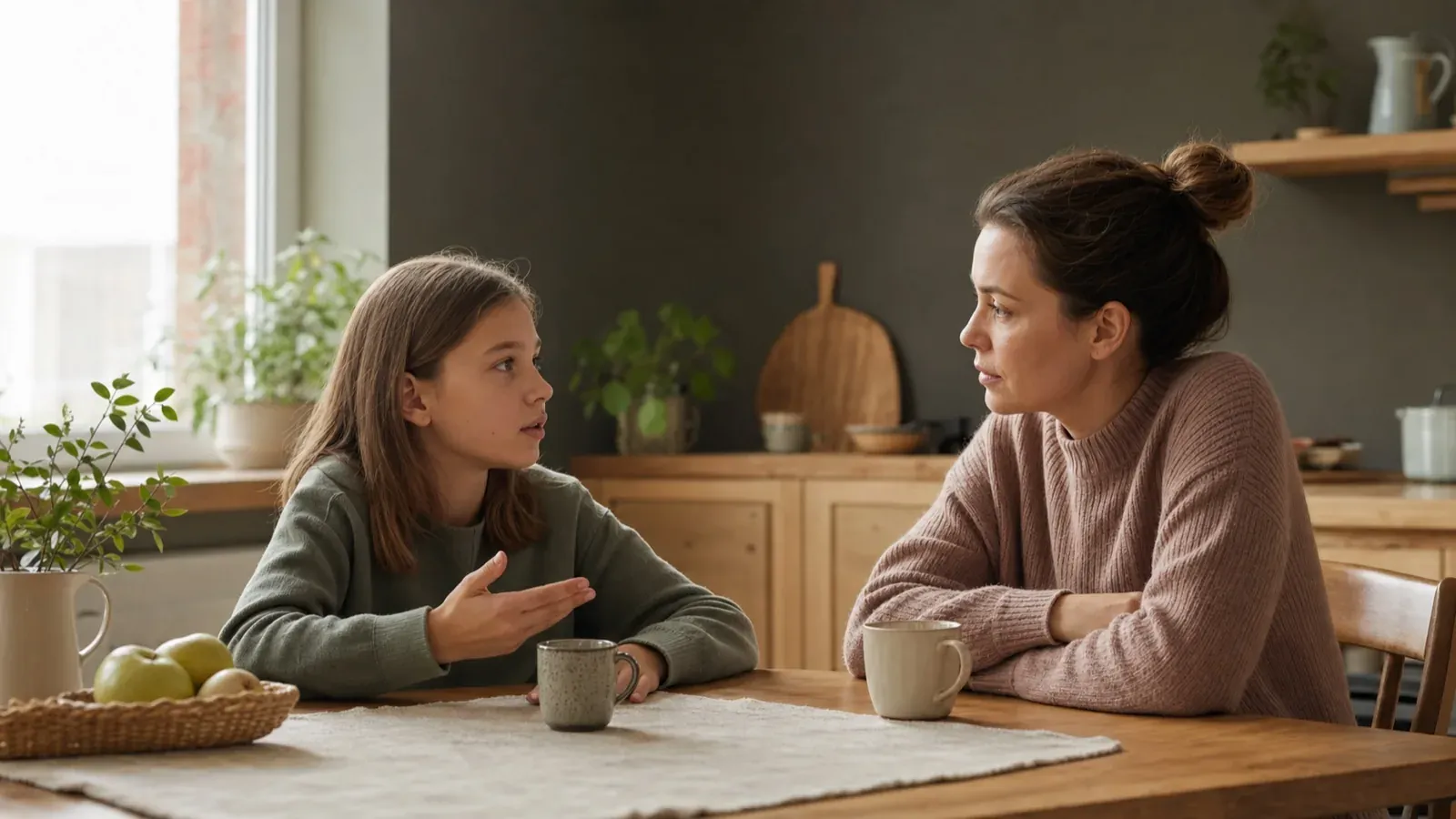

Holidays with children often look one way and feel quite different. From the outside there are trips, the sea, nature, grandparents and more free time. In reality, there is a changed routine, lots of new experiences, parents wanting everything to go well, and children’s emotions that do not always fit the day’s plans.
It is therefore unrealistic to expect a holiday with no conflict at all. What matters more is helping the family enjoy being together: less rushing, less tension and more time for one another.
At a glance: holidays with children without unnecessary stress
- Avoid overplanning: fewer activities and more calm time together can work better.
- Keep a few familiar parts of the day, such as bedtimes or mealtimes.
- Remember your own need for rest as well as your children’s entertainment.
- If your child is angry or crying, first consider what they may be communicating rather than how to calm them as quickly as possible.
- Return to your usual rhythm gradually, rather than waiting until the last day of the holiday.
Why can holidays with children be exhausting when they are meant to be enjoyable?
For adults, holidays often mean freedom from work. For children, they can bring both freedom and uncertainty. A different bed, unfamiliar food, a long car journey, too many people, heat, noise and a changed bedtime can all be very tiring experiences. Younger or more sensitive children may react more strongly to these changes.
Parents face a double task: they want to rest themselves, yet still need to organise, anticipate, coordinate, soothe and keep everyone safe. If they also feel that "this holiday has to be perfect", tension naturally increases.
- your child becomes more irritable, cries over small things and tires quickly;
- arguments increase around sleep, food, screens or moving from one activity to another;
- parents feel they are constantly organising and soothing, without getting any rest themselves;
- the family keeps trying to follow the plan, but feels less and less connected.
Holidays with children and connection: what really strengthens a family?
Research on family leisure suggests that satisfaction with time spent together is associated with greater satisfaction with family life. But connection does not depend on the cost of a trip or the number of photos. For a child, what often matters most is the experience of "I am seen", "my emotions are not too much", "people want to be with me" and "when I struggle, an adult stays and helps me settle".
Sometimes connection grows more through an unhurried morning, a relaxed family dinner, a simple game, a bedtime conversation or a parent’s willingness to say "today was too much; tomorrow we will keep things simpler" than through another excursion.
Children’s routines on holiday: how much structure is needed?
A holiday does not need to copy the school or nursery timetable. Completely losing the daily rhythm can nevertheless work against the family: children become overtired, parents more irritable, and conflict arises over things that could have been anticipated.
Sleep
Allow yourselves a little more flexibility, while trying to ensure your child gets enough sleep. When children are short of sleep, they may become angry more quickly, more sensitive, more tearful and harder to reason with.
Food
Bring simple snacks and water. Hunger during a journey often looks like "bad behaviour", when it is really a physical need.
Transitions
Give your child a warning before changing activities: "five more minutes, then we will go". Children can find it hard to stop suddenly when they are absorbed in something.
Quiet breaks
Even very active children become tired by lots of new experiences. Make some time each day without plans, rushing or entertainment. Sometimes the best rest is simply having nowhere to hurry to and being quiet for a while.
How can parents experience less stress when travelling?
Holidays with children can be much calmer when parents do not aim for perfection. Plan only what is realistically manageable and leave room for spontaneity. A plan helps, but should not become more important than the family’s wellbeing. Changing the route, dropping an activity or slowing down does not mean the holiday has failed. This flexibility often helps everyone relax and enjoy their time together.
Scale back the programme
One main plan for the day often works better than three attractions, two restaurants and an evening activity. Children need time to move between activities, stop, play and simply be, without a goal.
Explain the rhythm of the day
Briefly tell your child in the morning where you will go, when you will eat, when there will be rest and what to expect. Uncertainty can increase anxiety, especially for more sensitive children.
Make room for your child’s choices
A child cannot decide everything, but can choose an ice-cream flavour, a T-shirt, a game on the beach or which path to take. Small choices encourage cooperation.
Remember to care for yourself too
Children are sensitive to their parents’ moods. When adults are constantly tired, tense or irritable, children may also find it harder to settle and manage their emotions. Parents’ rest is therefore neither a luxury nor selfish. When parents feel better, the whole family is more likely to feel calmer.
What if my child is angry, cries or wants to do nothing on holiday?
These situations do not mean the holiday has failed. Anger, tears or refusing to go somewhere often show that things feel too difficult for a child, rather than that they are behaving badly. They may be tired, short of sleep, hungry, too hot, overwhelmed by noise or simply taking in too much. Instead of starting with a scolding or lecture, try to understand what is hardest for your child right now. Sometimes a short break, water, a snack, a calm hug or a quieter space is enough. When basic needs are met, managing emotions becomes much easier too.
A simple sequence for supporting emotions
- If the situation becomes unsafe, first stop what is happening.
- Consider whether your child is tired, hungry, too hot, overwhelmed by noise or has had to wait too long.
- Briefly name the feeling: "I can see it is really hard for you to stop right now."
- Clearly explain what happens next and offer two acceptable choices: "We are going to eat now. You can walk by yourself, or I can hold your hand."
- Once everyone is calm, talk gently about what might help next time.
If your child’s emotions are very intense and this happens beyond holidays too, it may help to consult a professional. You can read more about difficulties affecting older children and teenagers in the article on teenagers’ psychological difficulties.
A practical plan: less stress, more connection
Before the trip
Choose your 2-3 most important expectations and agree boundaries around screens, sleep and budget in advance. When everything becomes equally important, tension grows.
During the trip
Have snacks, water, quiet breaks and a simple plan B. Conflict often decreases through less exhaustion rather than perfect discipline.
After you return
Do not rush to judge whether the holiday was a "success". Ask what felt good, what was tiring and what you would simplify next time.
When parents live apart: holidays with less tension for your child
When parents live apart, holidays also involve agreements: who will travel with the child and when, how many days the trip will last, and how the child will stay in touch with the other parent. When these decisions are left until the last minute, the child may feel the tension too.
Agree arrangements in advance
Discuss holiday dates, travel plans and the return time well before departure. Clear agreements help avoid surprises and last-minute arguments.
Keep your child out of adult disagreements
A child should not have to pass on messages or choose which parent’s holiday is "better". It helps them to know that both parents love them and that they are allowed to enjoy time with each.
Plan contact with the other parent
A short call or message at an agreed time can help a child feel safer, especially during longer holidays.
Think about transitions
Leaving and returning to the other parent are separate changes for a child. A calm goodbye and a little time to adjust after the trip may help more than rushing through everything.
For more on talking to children about separation and finding support when reaching agreements is difficult, read "After a breakup: finding your feet, one step at a time"
When do difficulties on family holidays point to a deeper problem?
Sometimes a holiday simply brings existing family difficulties into focus: ongoing tension between parents, children’s anxiety, teenagers withdrawing, parental burnout, difficulty setting boundaries or a feeling that the family no longer understands one another. The trip itself is then not the problem. It removes the structure of everyday routines and reveals how the family manages closeness, frustration and individual needs.
If you would like to understand your situation better, I offer online sessions via Teams in Lithuanian and English, suitable for people living in Lithuania or abroad. You can find more about the format on the online psychological consultation page, and if you are unsure whether it is time to reach out, read when to see a psychologist.
Frequently asked questions about holidays with children
Why are holidays with children often more stressful than I expected?
Holidays change sleep, food, surroundings, rules and parents’ expectations. For children, this can mean a lot of stimulation; for parents, a lot of organising. Stress does not mean the holiday has failed. It often shows that the family needs a clearer rhythm and less pressure to make everything perfect.
Do children need a routine on holiday?
You do not need to reproduce the usual timetable minute by minute, but children benefit from a few steady anchors: a similar bedtime, predictable meals, rest breaks, knowing the day’s plan in advance and a familiar ritual or two.
How should I respond when my child is angry, cries or no longer wants to join in during a trip?
First, check basic needs: tiredness, hunger, heat, too much noise or too long a wait. Briefly naming the emotion, using a calmer tone and offering a choice between two realistic options can help. Punishment often adds to the tension.
How many activities should we plan on a holiday with children?
It is often better to plan one main activity each day and leave plenty of free time. For children, connection comes less from a packed programme than from parents who can be emotionally available and unhurried.
Are screens always bad on holiday?
No. A screen can be a practical help on a long journey or when someone is overtired. What matters is that it does not become the only way to settle emotions or replace all time for connection. Agreeing boundaries in advance can reduce conflict.
How can we return to a routine after a family holiday?
If possible, leave at least one quieter day before nursery, school or work. Gradually restore sleep, meals and household routines. Children benefit from a clear explanation of what will happen tomorrow, while parents benefit from not expecting peak productivity on their first day back.
When is it worth seeing a psychologist about difficulties on family holidays?
Consider support if holidays repeatedly bring the same pattern of conflict, anxiety, anger or withdrawal, if a child’s emotions are very intense, if parents constantly feel guilty and exhausted, or if these difficulties continue in everyday life.
Sources and further reading
- Agate, J. R. et al. (2009). Family Leisure Satisfaction and Satisfaction with Family Life
- Verywell Family: Holiday stress and anxiety in children
- Child Mind Institute: Why do kids have tantrums and meltdowns?
Connection often grows when things are less than perfect
It grows when a family can pause, listen to one another and adapt. If holidays consistently bring more tension than closeness, try to explore what support the family or parents may need, rather than blaming yourself.
Book a consultation